Article: Petrichor: The scent of rain
Petrichor: The scent of rain
edited and published again on 20.08.2026


Cart
Discover our bestsellers:




Article: Petrichor: The scent of rain
edited and published again on 20.08.2026
The scent of rain
After a long dry spell, a few drops are sometimes enough, and the air changes. An earthy, mineral scent rises from the ground – unmistakable and usually only fleeting.
This scent has a name: Petrichor.
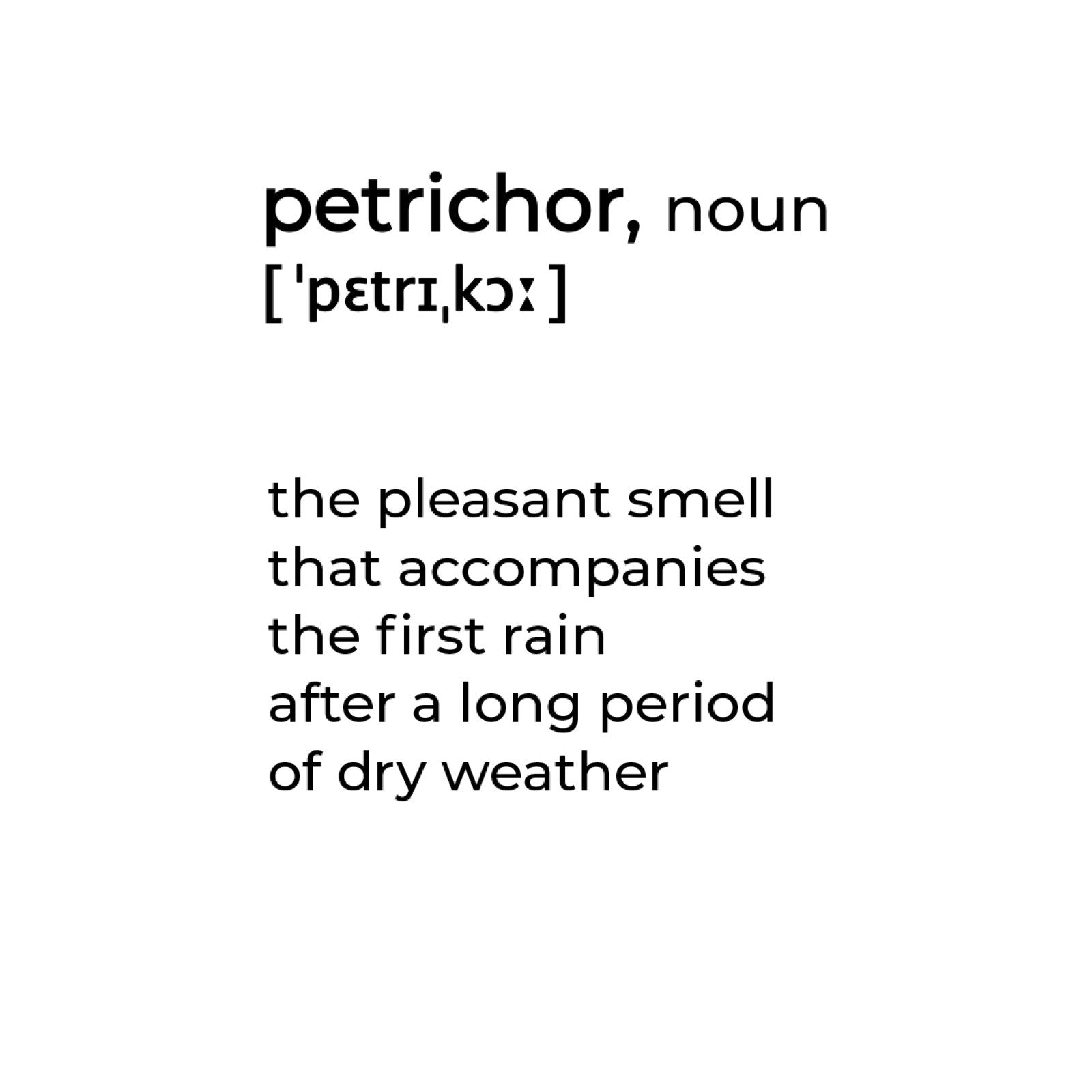
The term was coined in 1964 by the Australian researchers Isabel Joy Bear and Richard G. Thomas. It combines the Greek petra, stone, with ichor, the fluid that flowed through the veins of the gods in Greek mythology.
Bear and Thomas investigated a scent that had long been associated with the first rain after a dry period. In rock and soil, they found a yellowish oil that accumulates under dry conditions and is released again by moisture.
Petrichor therefore does not simply refer to the smell of rain itself. It is created by the encounter between water, dry soil, and air.
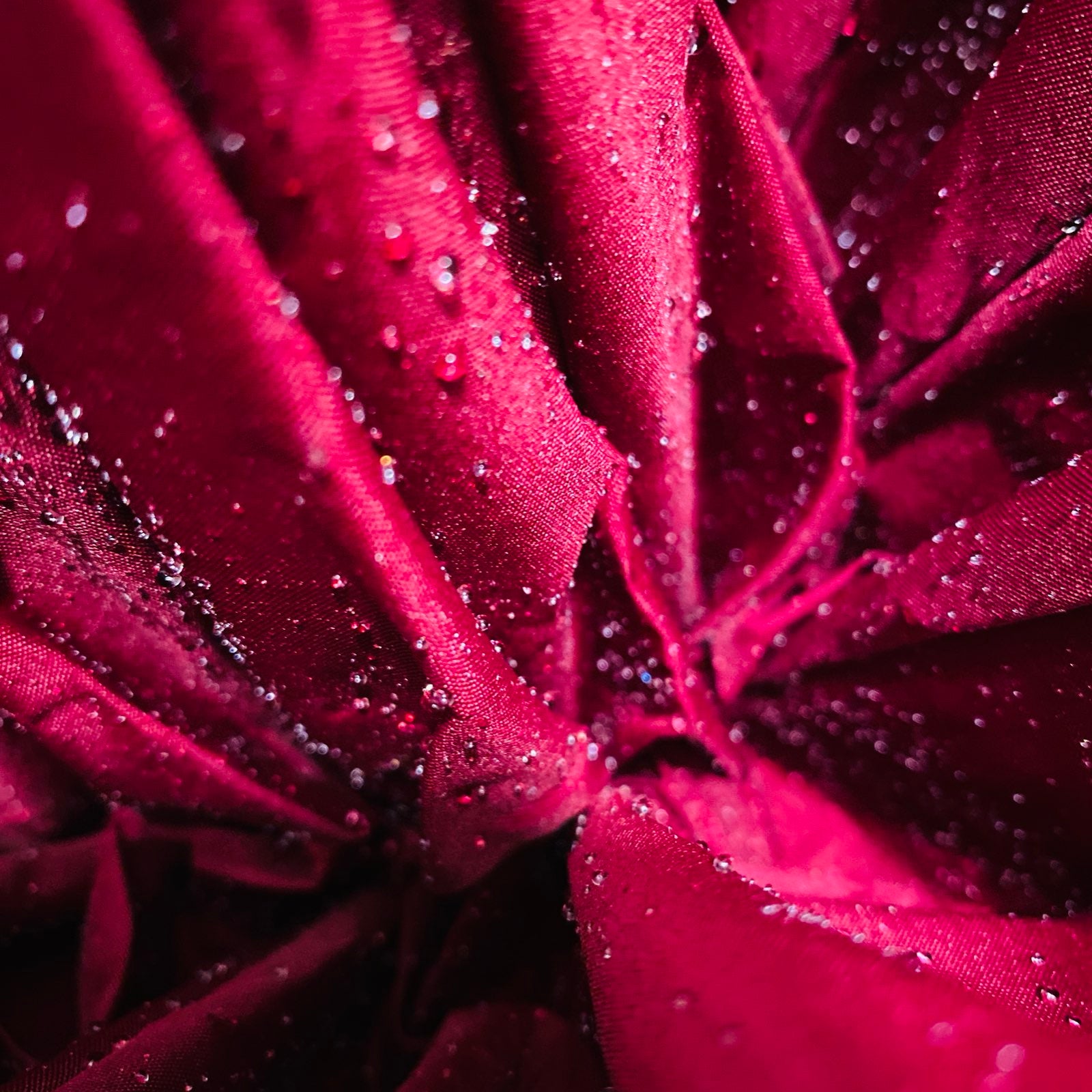
When a raindrop hits a porous surface, tiny air bubbles can be trapped at the point of contact. They rise through the drop and burst on its surface. In the process, fine aerosols are released into the air, carrying components of the familiar scent with them.
The intensity of petrichor therefore depends on several conditions: the preceding dryness, the composition of the soil, the humidity, and how the rain hits the surface.
An everyday sensory experience is based on a precise sequence of physical processes.

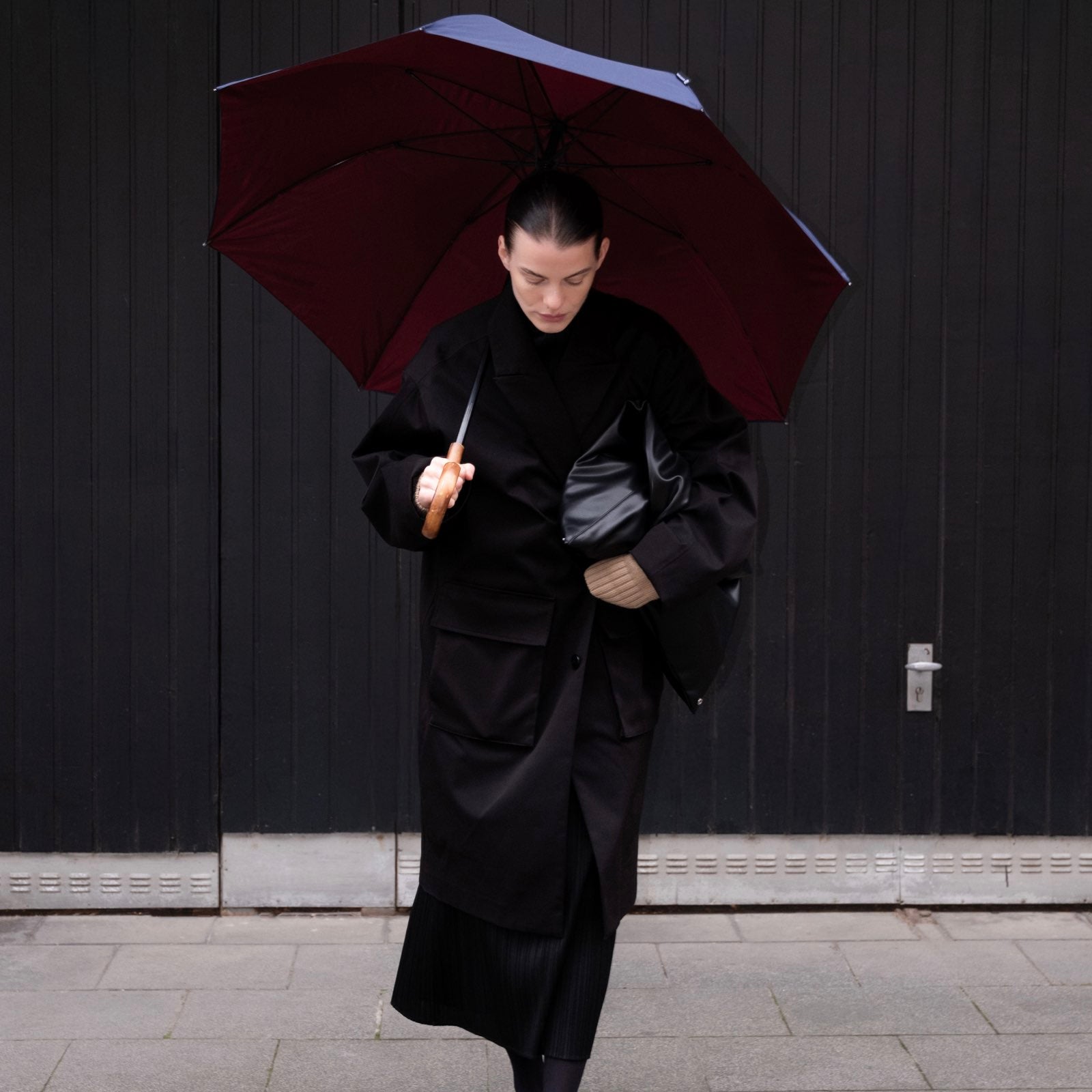


For the first Sapor campaign, we translated petrichor from nature into an urban context.
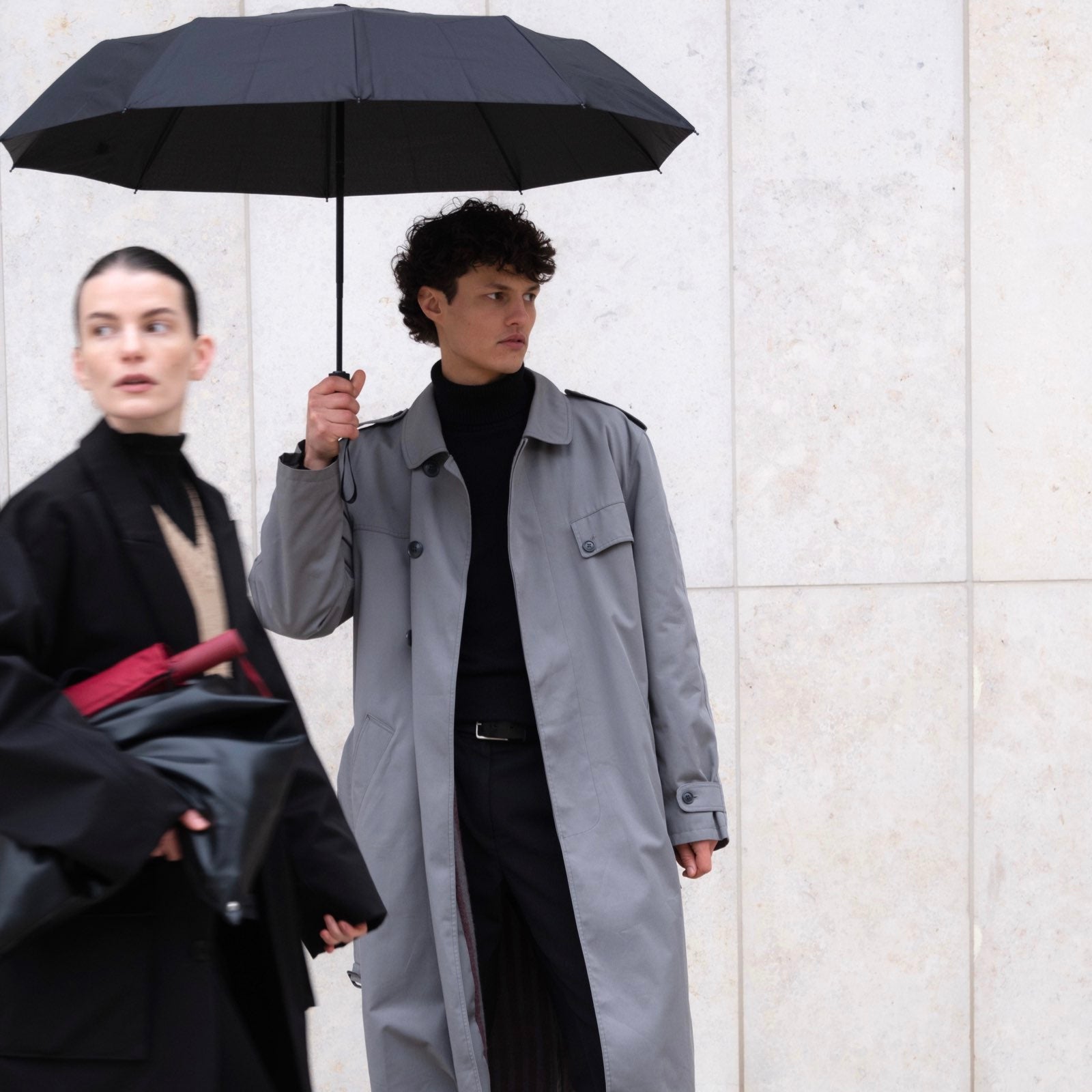
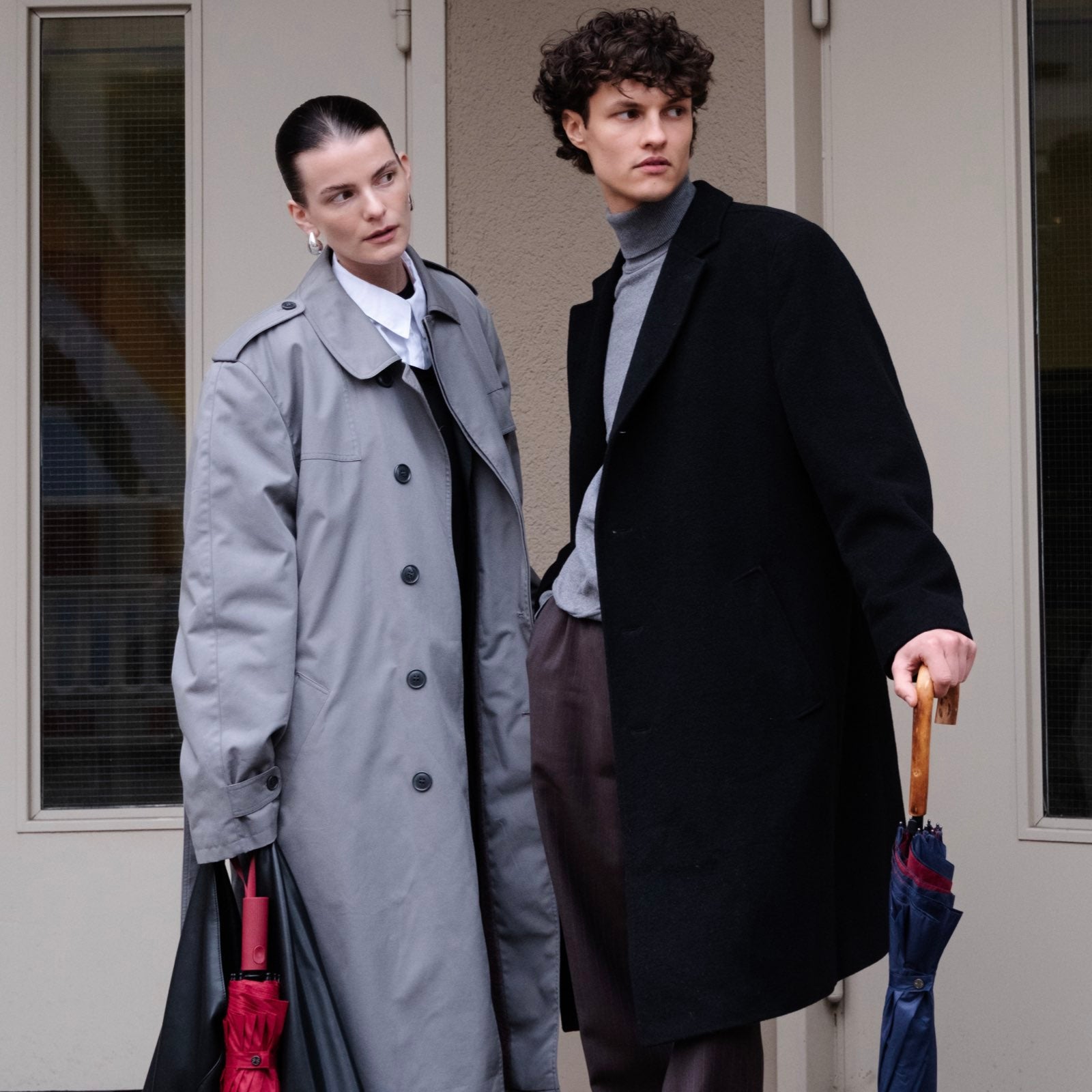
The photos were taken in Cologne: among dark facades, light stone, asphalt, and clean architectural lines. The city is not merely a backdrop. Its surfaces react to the weather, darkening, reflecting light, and altering the perception of color.
The images therefore do not show the umbrella as an isolated product. It appears in relation to the body, to clothing, to architecture, and to another person. Open and closed. In motion and at a standstill. As protection, but also as a natural part of the image.
Red stands against black wood. Muted green meets dark clothing. Light stone allows contours and colors to emerge. The rain is not always visible, but its presence defines every shot.


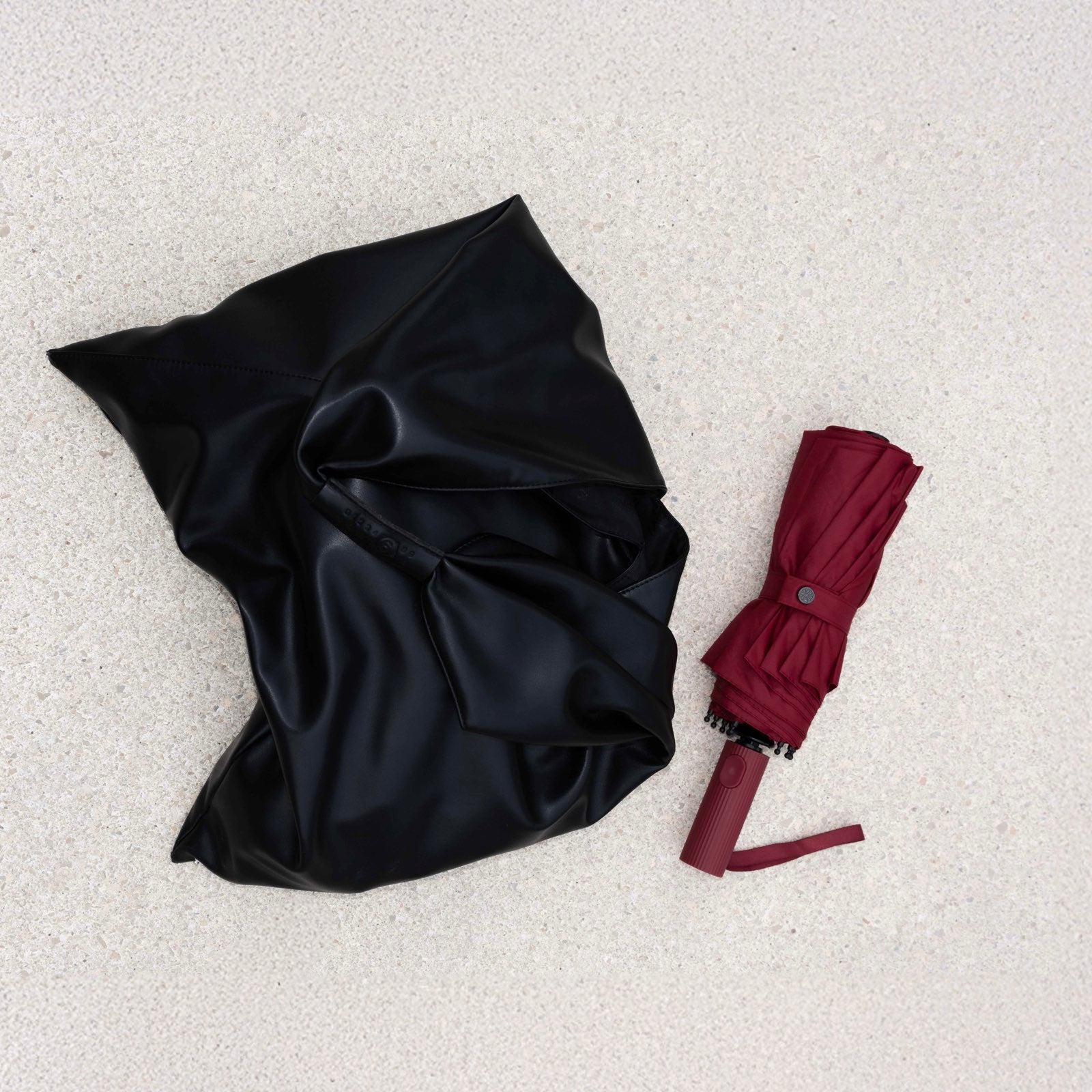
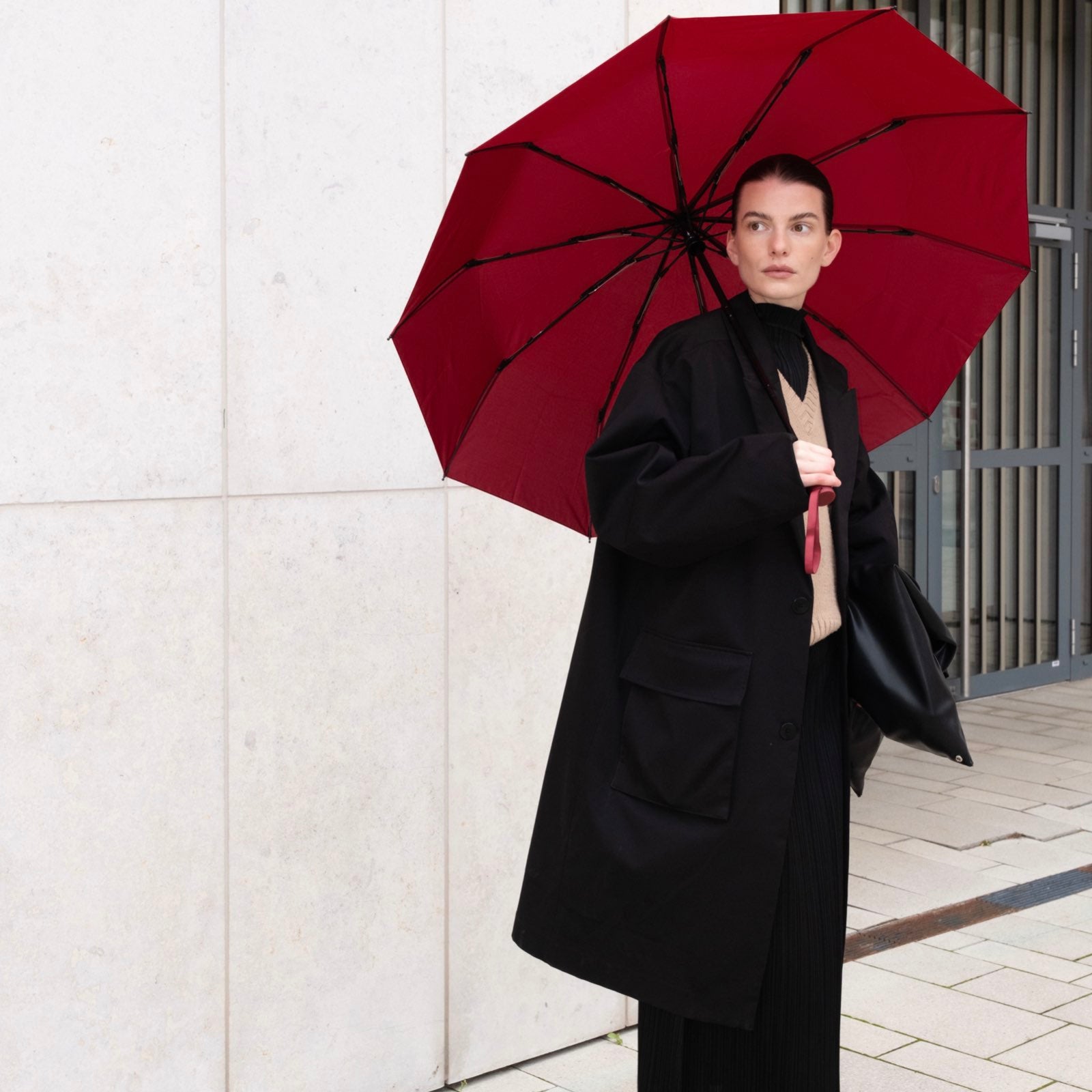
Petrichor does not last long. As soon as the ground is completely wet, its special intensity fades away.
Perhaps that is precisely why we perceive the scent so clearly. It marks a transition: from dry to wet, from expectation to event, from a familiar city to an environment that has changed for a moment.
A good umbrella does not make the weather disappear. It allows us to move within it and perceive the change.
Embrace the rain.
Sources: I. J. Bear and R. G. Thomas, "Nature of Argillaceous Odour", Nature, 1964; Young Soo Joung and Cullen R. Buie, "Aerosol Generation by Raindrop Impact on Soil", Nature Communications, 2015.