

From Parasol to Design Object: A Brief History of the Umbrella
Few everyday objects are as immediately legible as an umbrella: a central shaft, a radial arrangement of ribs and a canopy held in tension above them. Its basic geometry appears so natural that it can seem as though the umbrella has always existed in its present form.
Its history does extend across millennia, but it is not a straight line from a single invention to the object we know today. Different cultures developed portable shades, ceremonial canopies and, eventually, protection from rain. Along the way, not only the construction changed. The meaning of the umbrella changed with it: from an emblem of power to a fashion accessory, and from a cumbersome implement to an everyday companion.
In the Beginning, There Was Shade
The earliest predecessors of the umbrella were not rain umbrellas in the modern sense. Images from ancient Egypt and Mesopotamia show large shades or canopies carried above individuals. Distinct traditions of portable umbrellas also developed in China over many centuries.
Their primary purpose was to provide shade. At the same time, they often made social rank visible. Rather than being carried by the person beneath them, they were held over rulers and other high-ranking figures by attendants. Protection and representation were closely connected.
That original purpose remains visible in language. The English word “umbrella” derives, through Italian, from the Latin “umbra”: shade. The word “parasol” likewise refers directly to protection from the sun.
The history of the umbrella therefore begins not with rain, but with the deliberate creation of a personal space beneath a canopy.
From Status Symbol to Personal Object
Portable sunshades were known in ancient Greece and Rome, where they were primarily associated with women from privileged social circles. Here, too, they served more than a practical purpose. Their materials, decoration and the ability to have someone carry them made them part of the visible social order.
Different types of umbrellas travelled and changed through trade, travel and cultural exchange. This was not a simple movement from East to West. Constructions, materials and customs were adopted, forgotten and reinterpreted in different places.
Umbrellas were known in early modern Europe, but they were far from being an ordinary part of everyday life. They remained expensive, relatively cumbersome and closely connected to fashion, status and regional convention.
Paris and the Early Folding Umbrella
A remarkable development took place in Paris at the beginning of the eighteenth century. On 1 January 1710, Jean Marius received a five-year royal privilege for a folding umbrella he called a “parasol-parapluye brisé à porter dans sa poche” — a collapsible sun and rain umbrella that could be carried with its owner.
It was not yet a pocket umbrella in the modern sense. Nevertheless, it expressed a design objective that remains relevant today: an umbrella should not only provide protection; it should also be easy to carry.
In a letter written in 1712, Elizabeth Charlotte of the Palatinate referred to the system as a practical solution for unexpected rain during a walk. The reference shows how early the idea of portable, readily available weather protection had emerged.
London and the Rules of Convention
Umbrellas were not entirely unknown in eighteenth-century England, but they were long regarded as unusual. Particularly when carried by men, they could be perceived as foreign, fashionable or inappropriate. Resistance to the umbrella was therefore social rather than purely technical.
The traveller and writer Jonas Hanway is widely credited with carrying an umbrella regularly through London from the middle of the eighteenth century onwards. Later accounts describe the ridicule and attention this attracted. Although not every anecdote can now be verified, Hanway became an emblematic figure in the wider acceptance of the umbrella in Britain.
By the end of the century, its practical value had prevailed. An object that had once attracted attention gradually became an ordinary companion for rainy weather.
How Materials Changed the Umbrella
Early European umbrellas were heavier and more cumbersome than the models used today. Their frames could be made from wood, cane or whalebone, while oiled silk and cotton were used for the canopy. Joints were relatively crude, frames were vulnerable and coated fabrics could stick together in their folds.
During the nineteenth century, industrial production and new materials transformed the umbrella. In 1848, William Sangster patented the use of alpaca cloth for umbrella canopies. Four years later, Samuel Fox developed the Paragon rib: a thin, U-shaped steel strip that combined strength with a lower use of material.
Developments such as these made umbrellas lighter, more resilient and more precise to manufacture. Their outward appearance remained familiar, but internally they became increasingly sophisticated technical systems.
The history of the umbrella is therefore less a succession of spectacular reinventions than a history of cumulative structural improvements.
The Long Road to the Modern Folding Umbrella
The modern folding umbrella did not appear in a single moment either. Hans Haupt worked for years on shorten-able umbrellas and telescopic shafts. As early as 1916, he filed a patent application for a construction using telescopically arranged shaft sections.
In 1928, he registered the Knirps trademark. On 26 April 1930, he filed the patent application for the shorten-able umbrella now regarded as a decisive step towards the modern pocket umbrella. The Solingen manufacturer Bremshey introduced the product in 1932, and the patent was granted in November 1934.
The year 1934 therefore does not mark the sudden invention of the folding umbrella. It marks the conclusion of a much longer development process.
Knirps made an idea first articulated centuries earlier reliable on an industrial scale: reducing a fully functional umbrella until it could be carried as a matter of course.
Is the Umbrella a Finished Object?
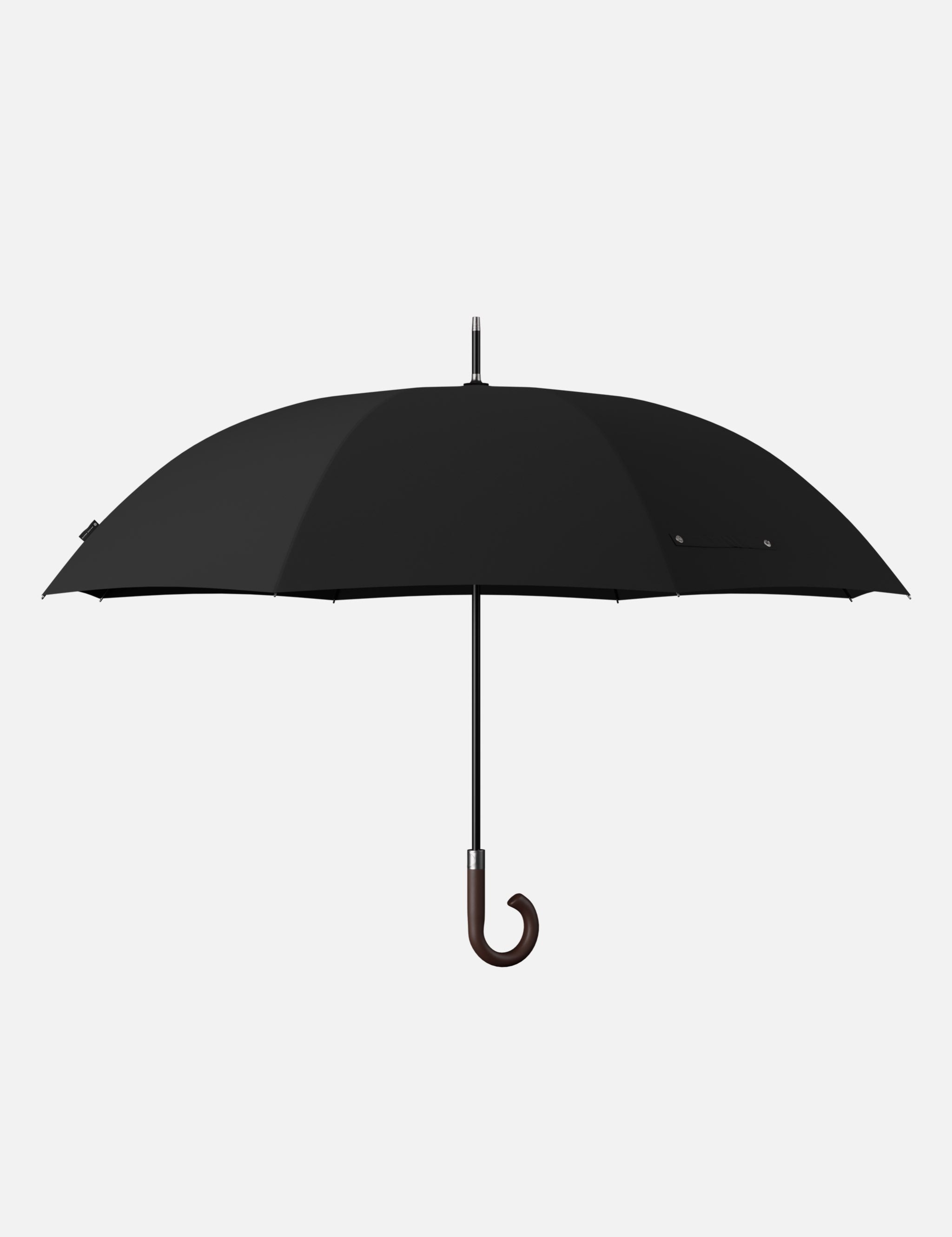
The basic principle of the umbrella has remained remarkably stable. A shaft supports a movable frame that tensions a precisely cut canopy. The construction is so direct and efficient that it requires no fundamental reinvention.
That does not mean the umbrella is a finished object.
Differences lie in the coordination of the entire system: the number and geometry of the ribs, the flexibility of the frame, the shaft and mechanism, and the cut and tension of the canopy. The handle, weight, balance, opening movement and behaviour in wind matter just as much.
Innovation does not necessarily mean adding more functions. It can mean refining familiar elements and giving an established object greater clarity, coherence and purpose.
What This History Means for Sapor
At Sapor, we do not consider the umbrella a secondary everyday object or a solved technical problem. We consider it as a whole.
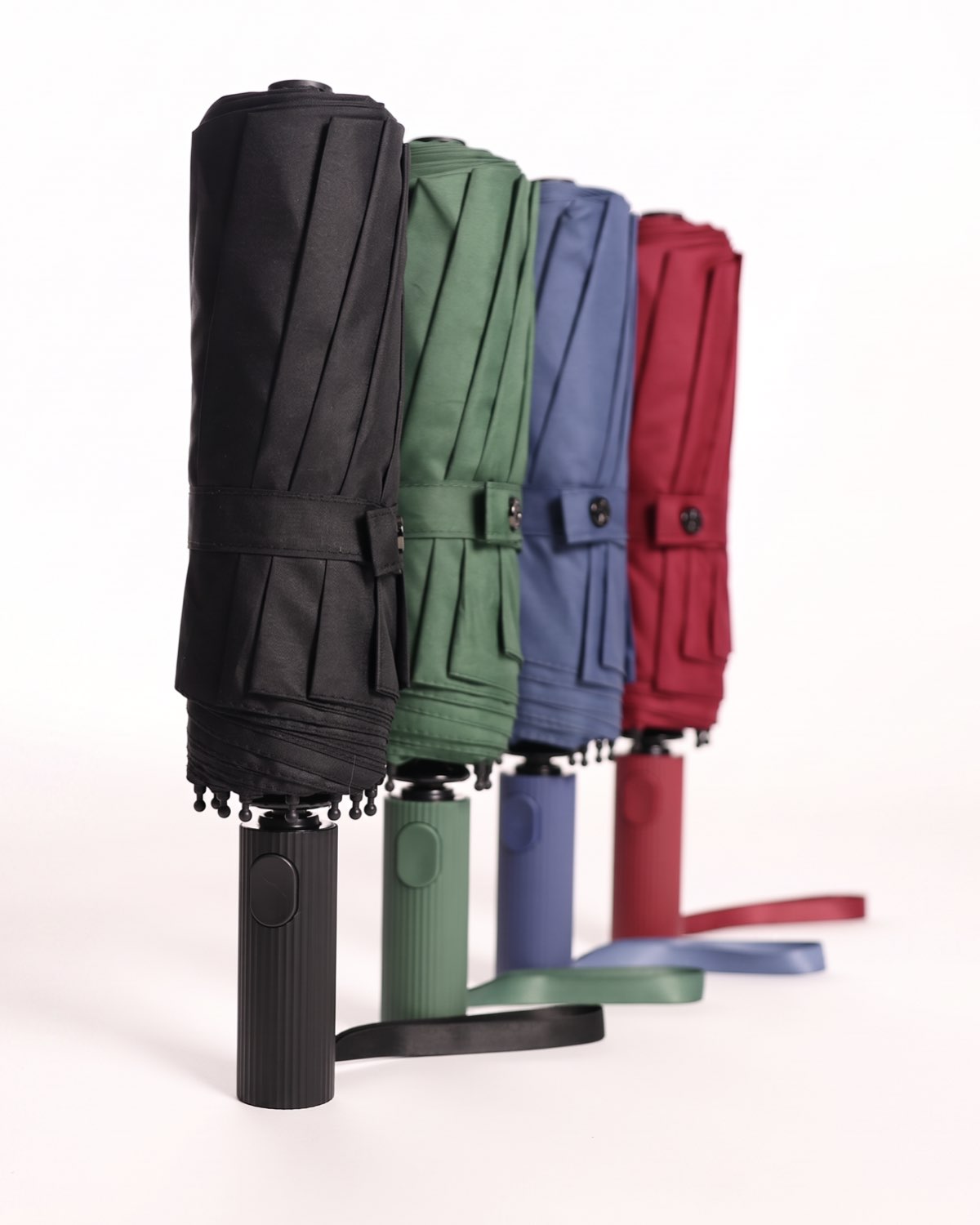
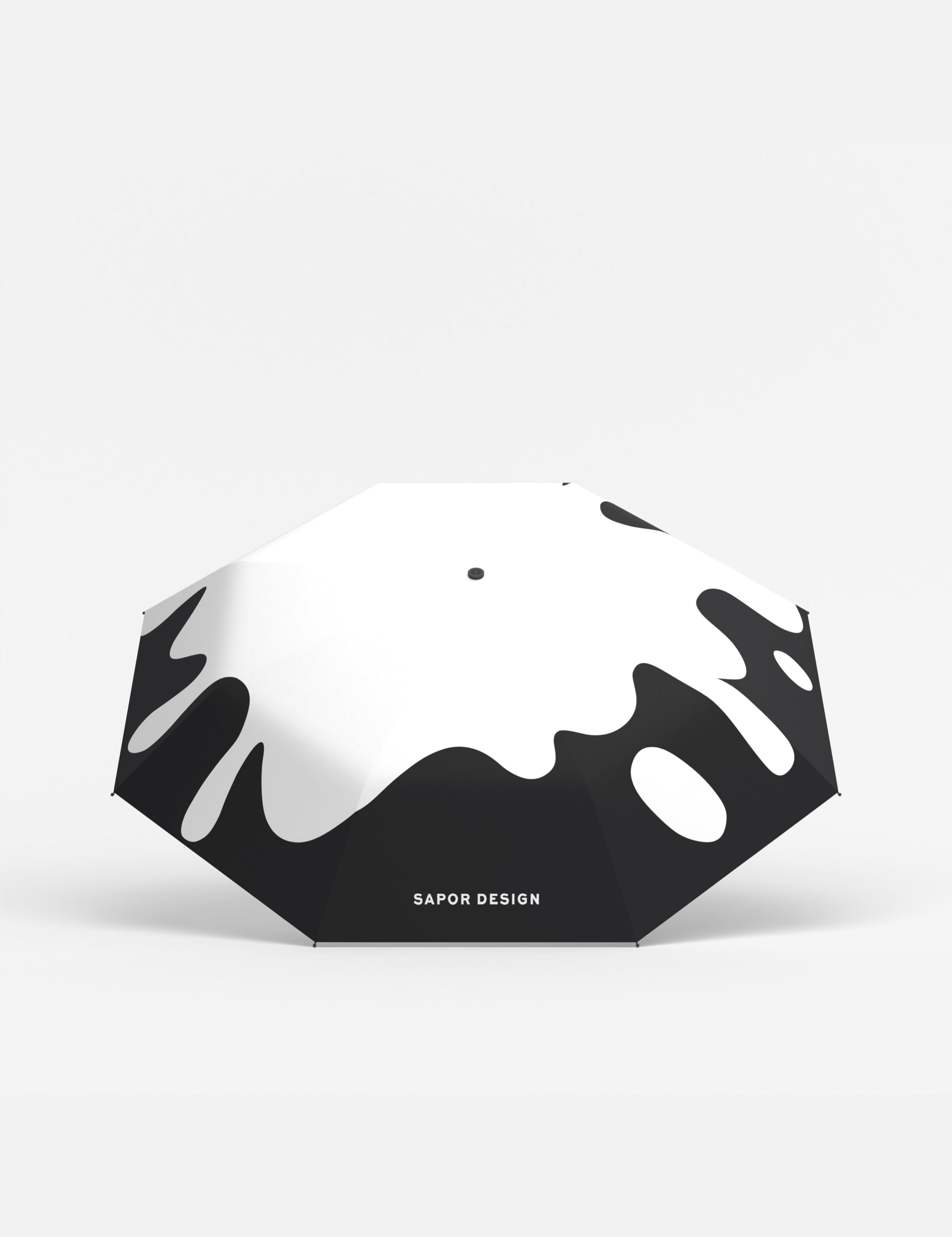
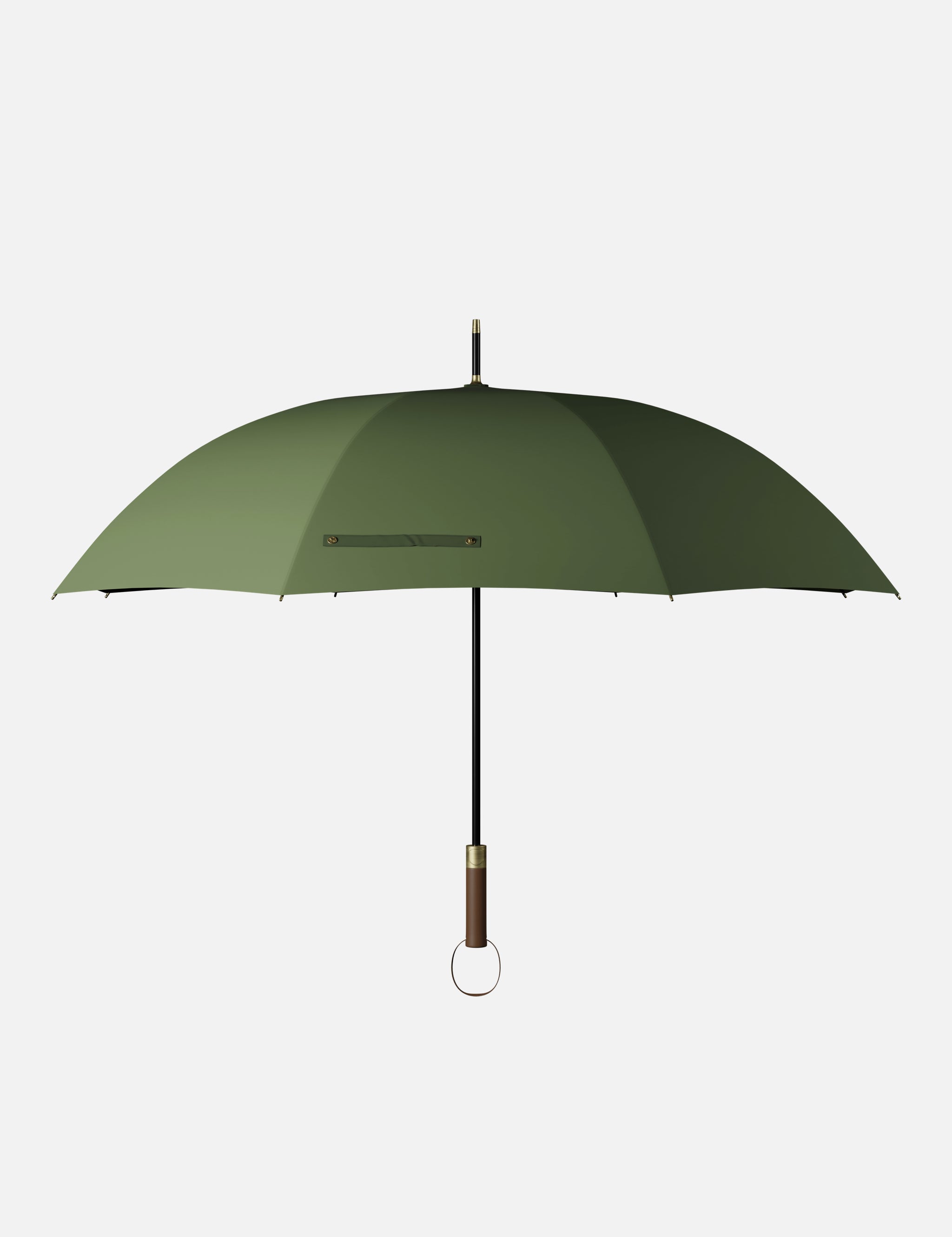
The Sapor Iconic, for example, spans its 107-centimetre canopy across ten fibreglass ribs. They define not only its structural stability, but also its finely segmented silhouette. Its column-shaped handle, automatic open-and-close mechanism and consistent use of colour belong to the same design idea.
The intention is not to interrupt the long history of the umbrella with the most conspicuous possible novelty. It is to continue that history through contemporary materials, proportions and expectations.
Even an object whose fundamental form has been familiar for centuries still leaves room for more considered decisions.
Embrace the rain.