
How to Recognise a Quality Umbrella: Seven Characteristics
An umbrella has a clear purpose: it should provide protection from rain while opening, moving and closing reliably. Because this task appears so straightforward, quality is often reduced to individual specifications—the number of ribs, the material of the shaft or a claim about wind resistance.
A quality umbrella, however, is not created by one isolated feature. What matters is the relationship between construction, material, proportion and use. A strong frame is of little value if the canopy is poorly tensioned. An elaborate handle cannot compensate for unsuitable weight distribution. And a mechanism is only convincing when its operation remains clear and controlled.
These seven characteristics help assess an umbrella as a complete object.
1. The Model Has a Clear Purpose
Not every umbrella needs to meet the same requirements. A folding umbrella should be compact enough to travel inside a bag. A stick umbrella can be larger and more present because it is carried as an object in its own right.
Quality therefore begins with a clear decision: what kind of use was the model designed for? Its size, weight, handle and mechanism should follow that purpose. A considered design does not attempt to maximise every possible characteristic at once. It establishes priorities and carries them through consistently.
2. The Frame Works as a System
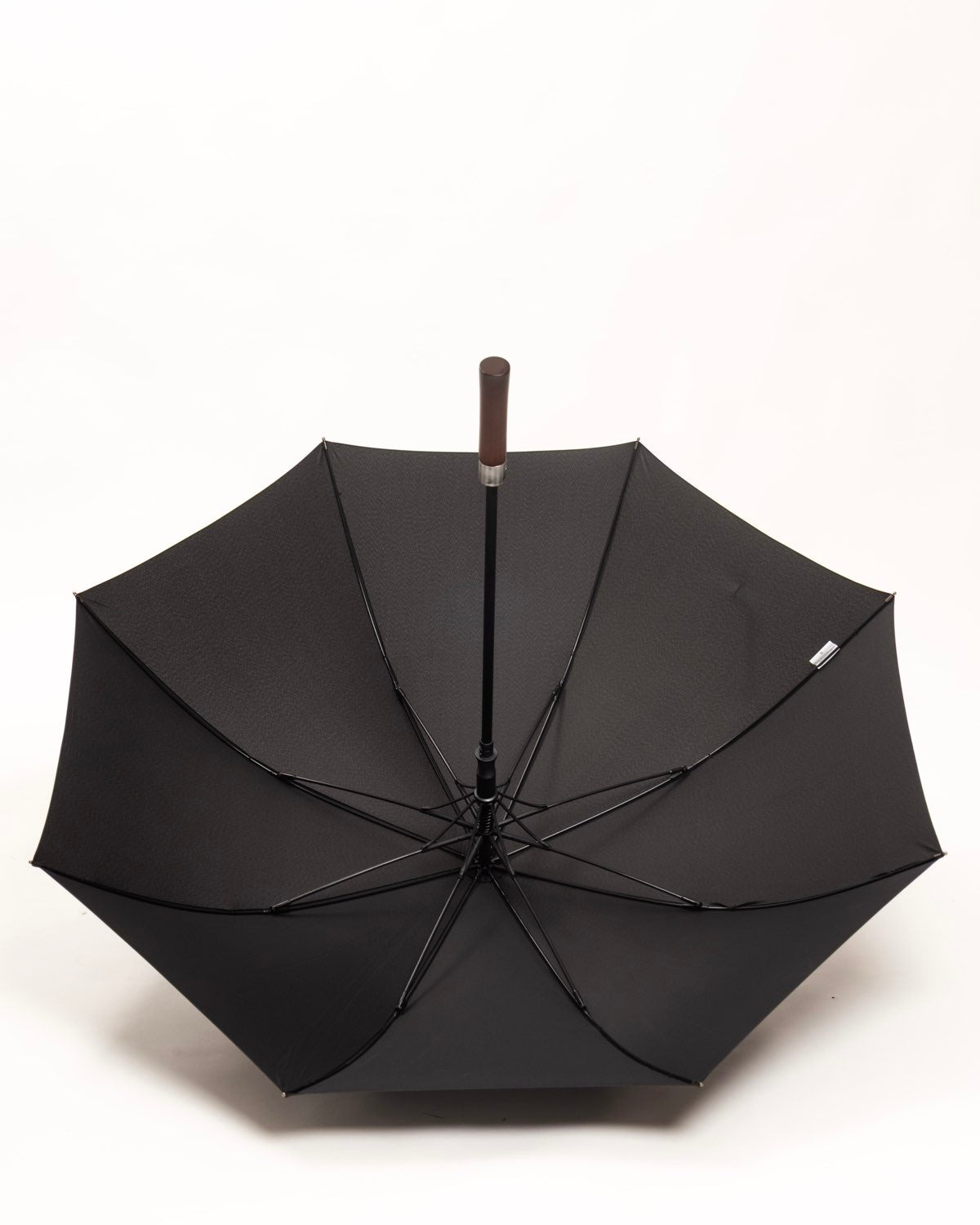
Beneath the canopy, the shaft, runner, joints, ribs and supporting ribs move together. The number of ribs alone reveals little. Their material, arrangement and connections—and the way forces are distributed across the frame—matter more.
Fibreglass ribs can move under pressure and return to their original shape. Steel lends stability to the shaft. Yet balance remains essential: one strong component does not automatically produce a well-resolved frame.
When opened, the canopy should unfold evenly. Joints should not catch unnecessarily, ribs should not work against one another and the shaft should move without excessive lateral play.
3. The Canopy Is Carefully Cut and Tensioned
The textile surface is an essential part of the construction. Its individual panels are sewn together along the frame and placed under tension when the umbrella opens.
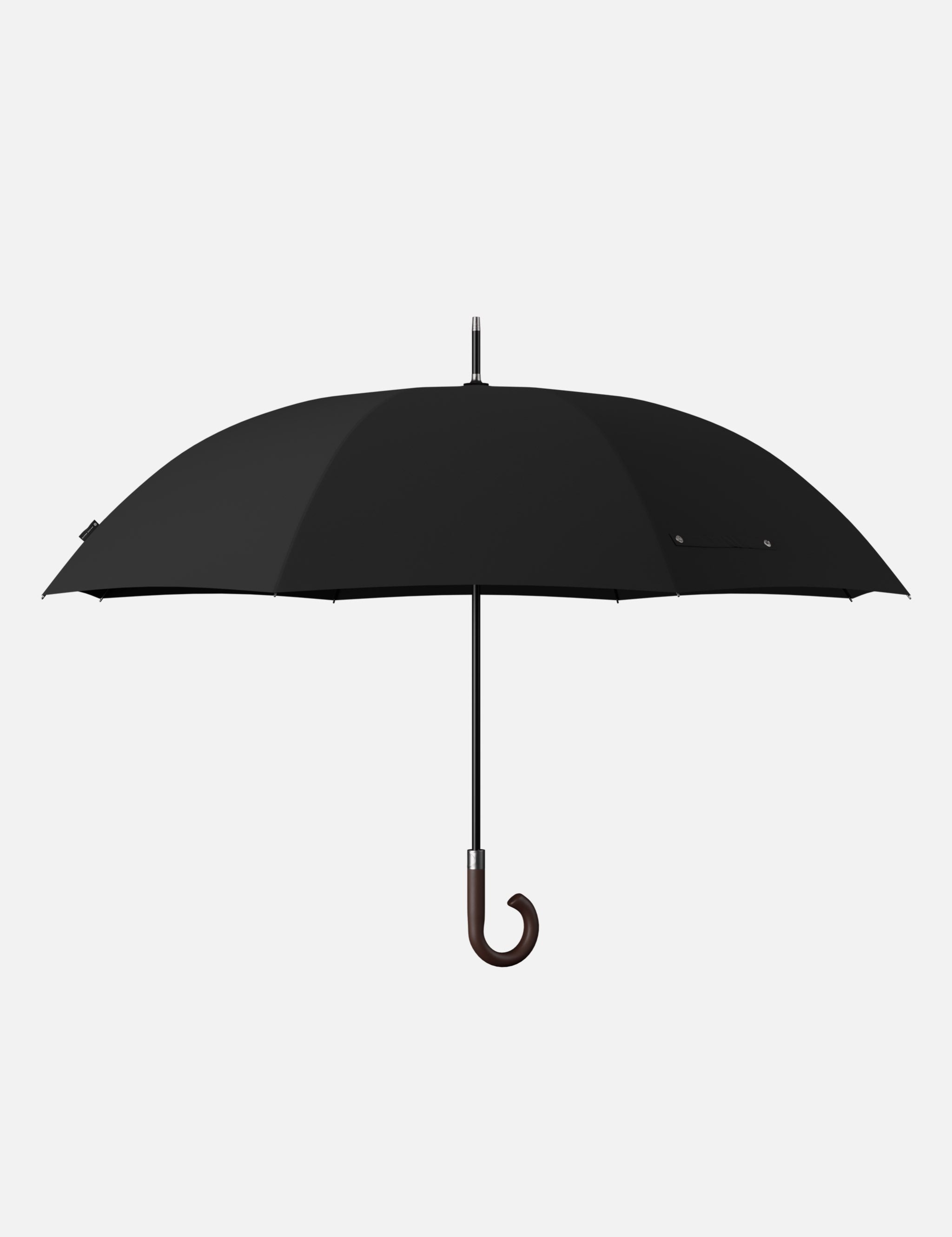
Careful cutting becomes visible in an even curve and clear transitions between the panels. Insufficient tension makes the canopy appear unsettled. Excessive or uneven tension can place unnecessary strain on seams and attachment points.
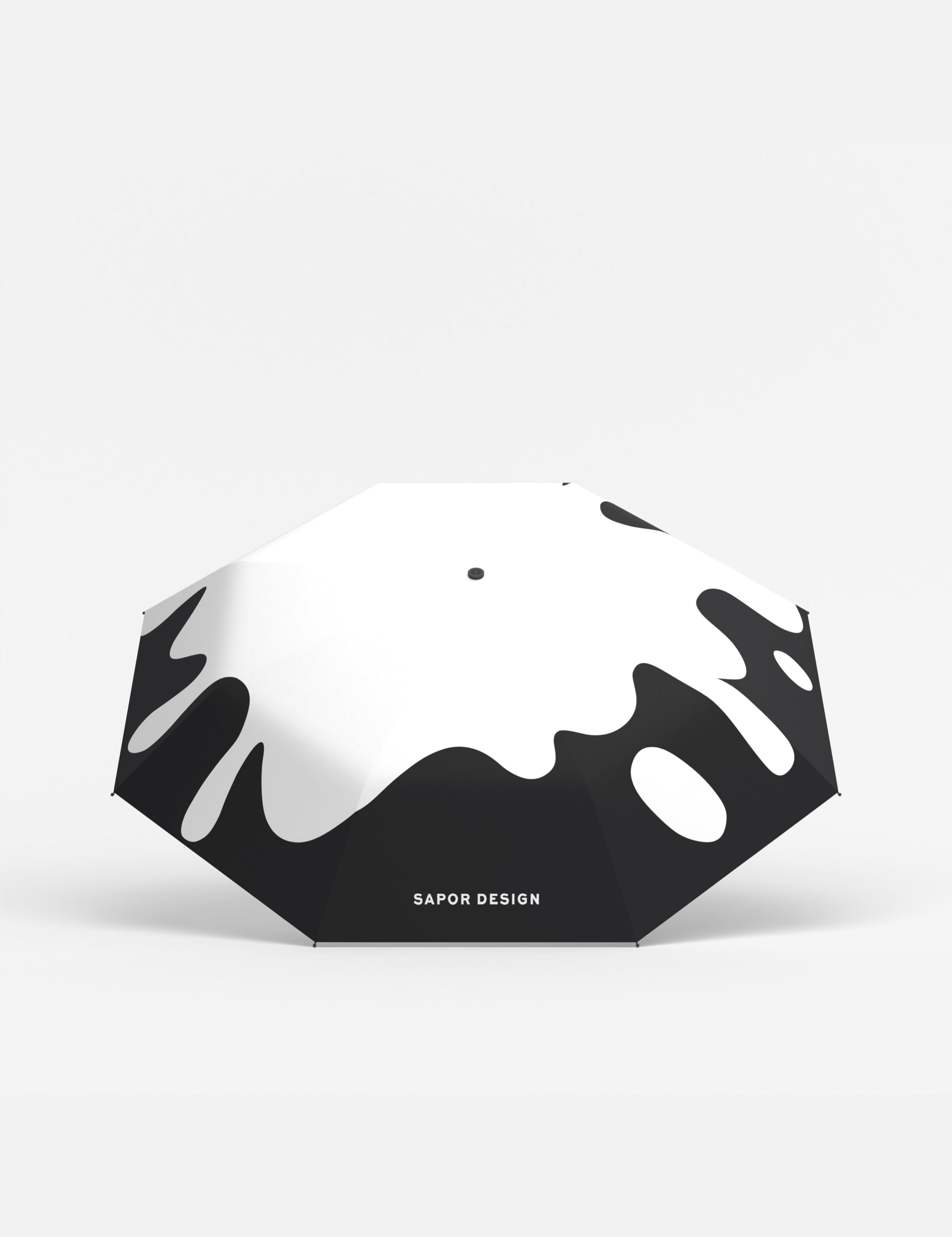
Patterns and colour transitions must also respond to the segmentation of the canopy. A graphic design does not exist on a flat surface; it only becomes complete when the individual panels are joined and opened across the frame.
4. The Mechanism Moves Clearly and Predictably
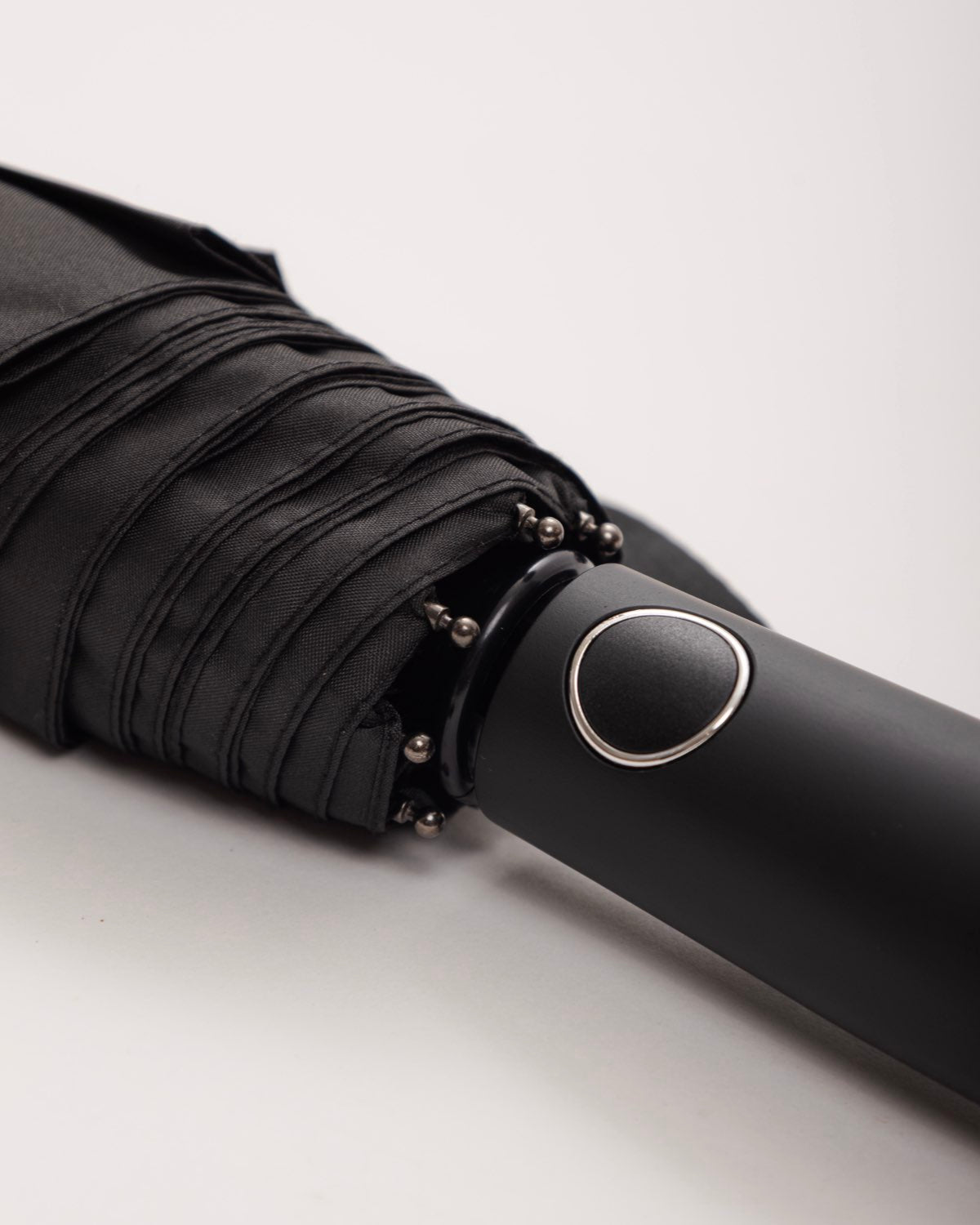
A good mechanism does not need to display its complexity. It reveals itself through a distinct movement, controlled resistance and a clear point of engagement.
With an automatic open-close mechanism, the button opens and closes the canopy. The telescopic shaft is then compressed by hand until it locks fully into place. With an automatic-opening mechanism, the canopy opens at the press of a button and is closed evenly by hand.
In both cases, the intended sequence should work without additional force. A stiff or blocked mechanism is not improved by forcing it.
5. Handle, Weight and Balance Belong Together
The handle is the direct connection between object and hand. Its form, surface and size influence how securely and naturally the umbrella can be held.
The handle cannot be considered separately from weight. An umbrella may be light and still feel unbalanced. Conversely, a larger model can rest calmly in the hand when its weight is distributed appropriately through the handle and shaft.
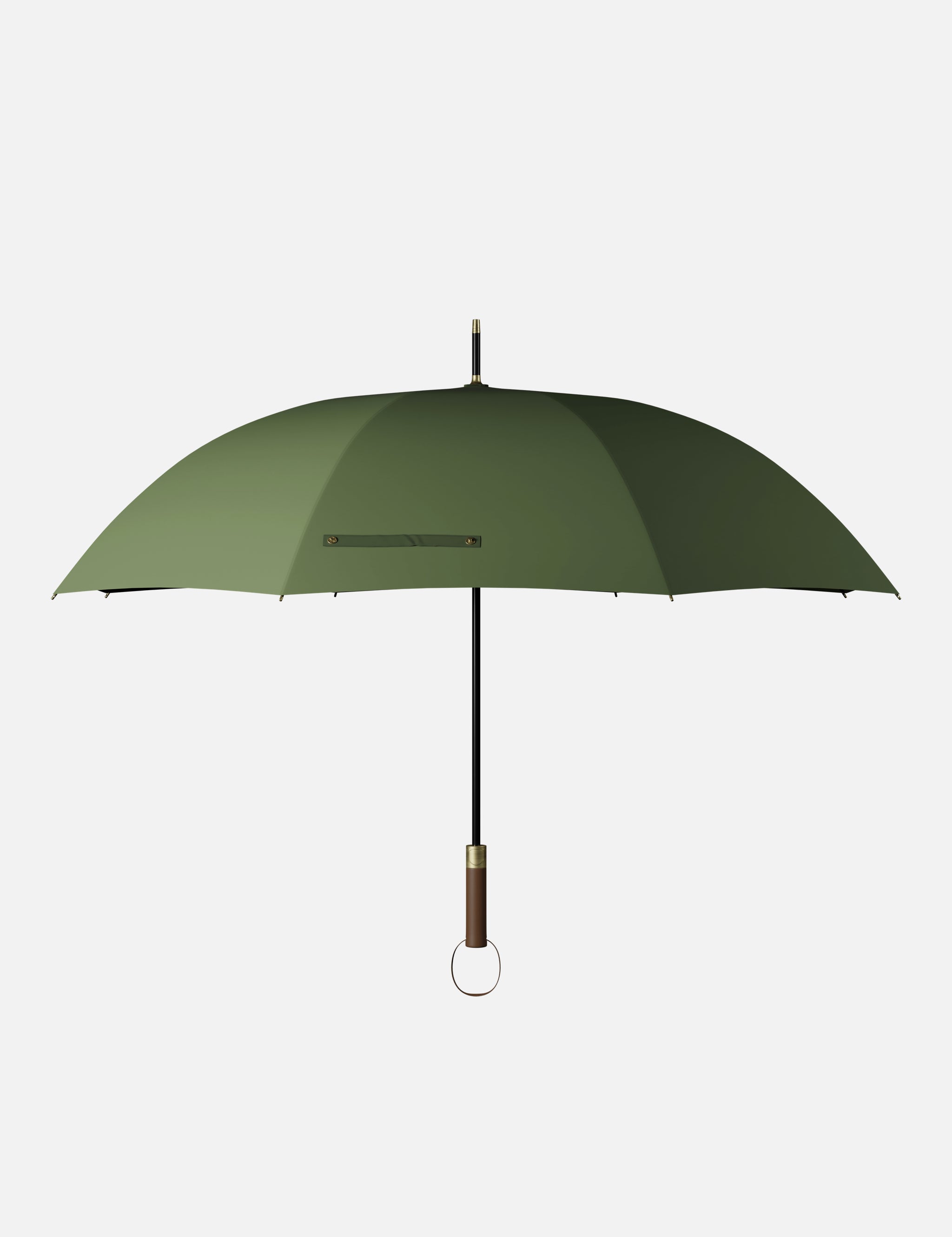
On a stick umbrella, a straight or curved wooden handle changes not only the silhouette but also the way the object can be carried. On a folding umbrella, the handle helps determine whether its compact dimensions remain comfortable and controlled when open.
6. The Closed Form Is Designed Too
An umbrella spends much of its life closed: in the hand, inside a bag, beside a door or hanging near an entrance. This state is therefore part of its design.
The fabric panels should wrap neatly around the shaft. The retaining strap should secure them without unnecessary compression. A well-designed case protects a dry umbrella from dirt and friction and can be used without awkward handling.
Proportion, handle and case together determine whether the closed umbrella appears merely collapsed or remains a considered object.
7. Quality Reveals Itself Through Repeated Use
The first impression matters, but it is not enough. A quality umbrella must repeat its qualities in everyday life: opening, being carried, closing, drying and being used again.
Quality therefore also includes materials that can be cared for appropriately and operation that can be explained clearly. An umbrella should be allowed to dry fully, should not be treated with unsuitable substances and should never be forced.
Quality does not mean that a moving object is indestructible. It means that construction and materials have been selected carefully, connected coherently and developed for their intended use.
The Relationship Between the Parts Matters
A quality umbrella cannot be reduced to rib count, weight or material. Only the relationship between canopy, frame, mechanism, handle, balance and closed form creates a convincing object.
The essential question is therefore not: which individual feature is remarkable? It is: how naturally do all the parts work together?
Embrace the rain.