
The Umbrella: An Overlooked Design Object
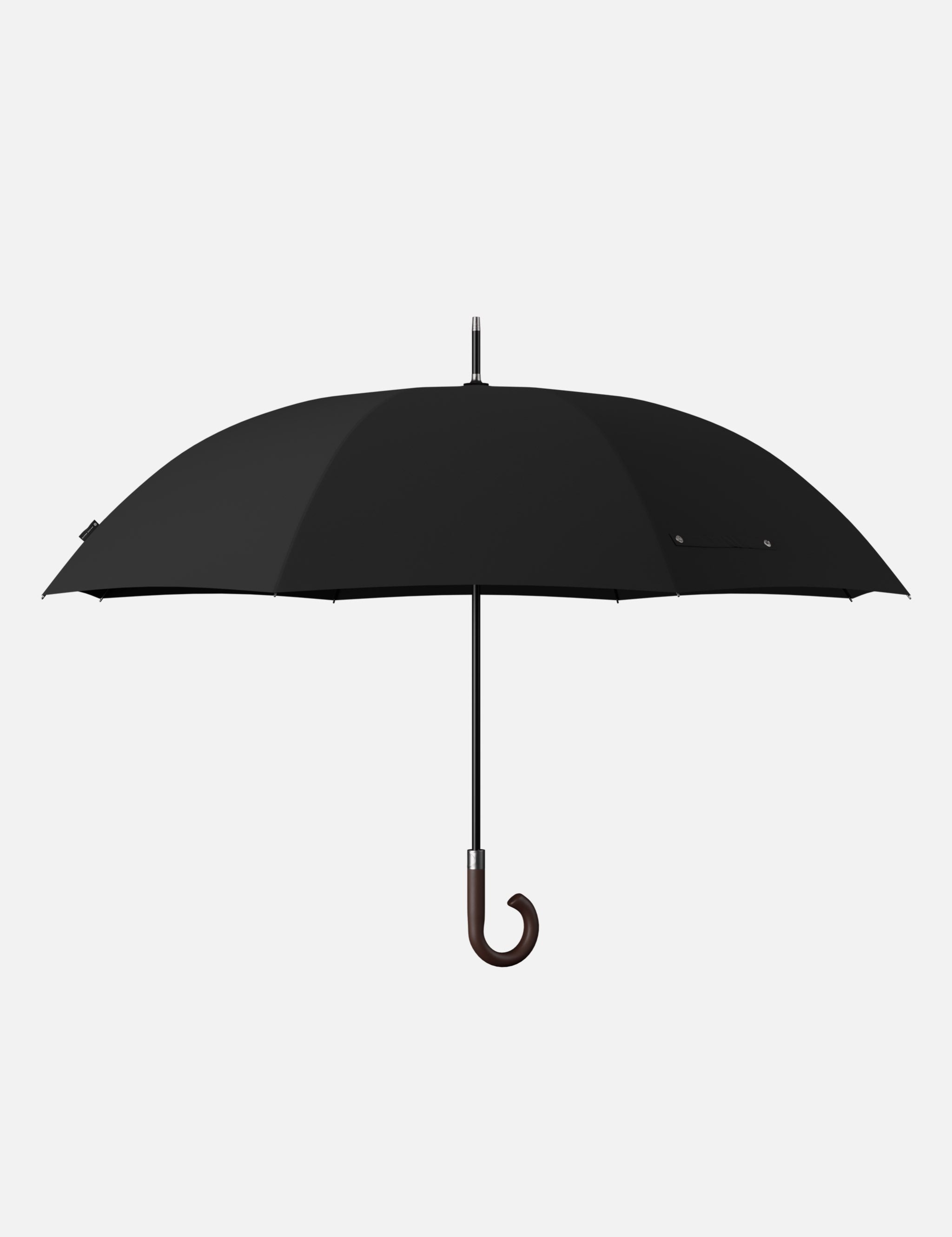
Its silhouette is immediately recognisable. A central shaft, a radially tensioned canopy and a handle connecting the object to the hand. Few everyday objects can be represented with as few lines as an umbrella.
And yet, it is rarely examined closely.
This is remarkable. An umbrella combines textile design, moving mechanics, material tension and ergonomics within a single object. It must open and close, respond to wind and rain, sit securely in the hand and then contract into a narrow form once its work is done.
An umbrella is not simply a canopy on a stick. It is an object that changes its form.
A Personal Space Outdoors
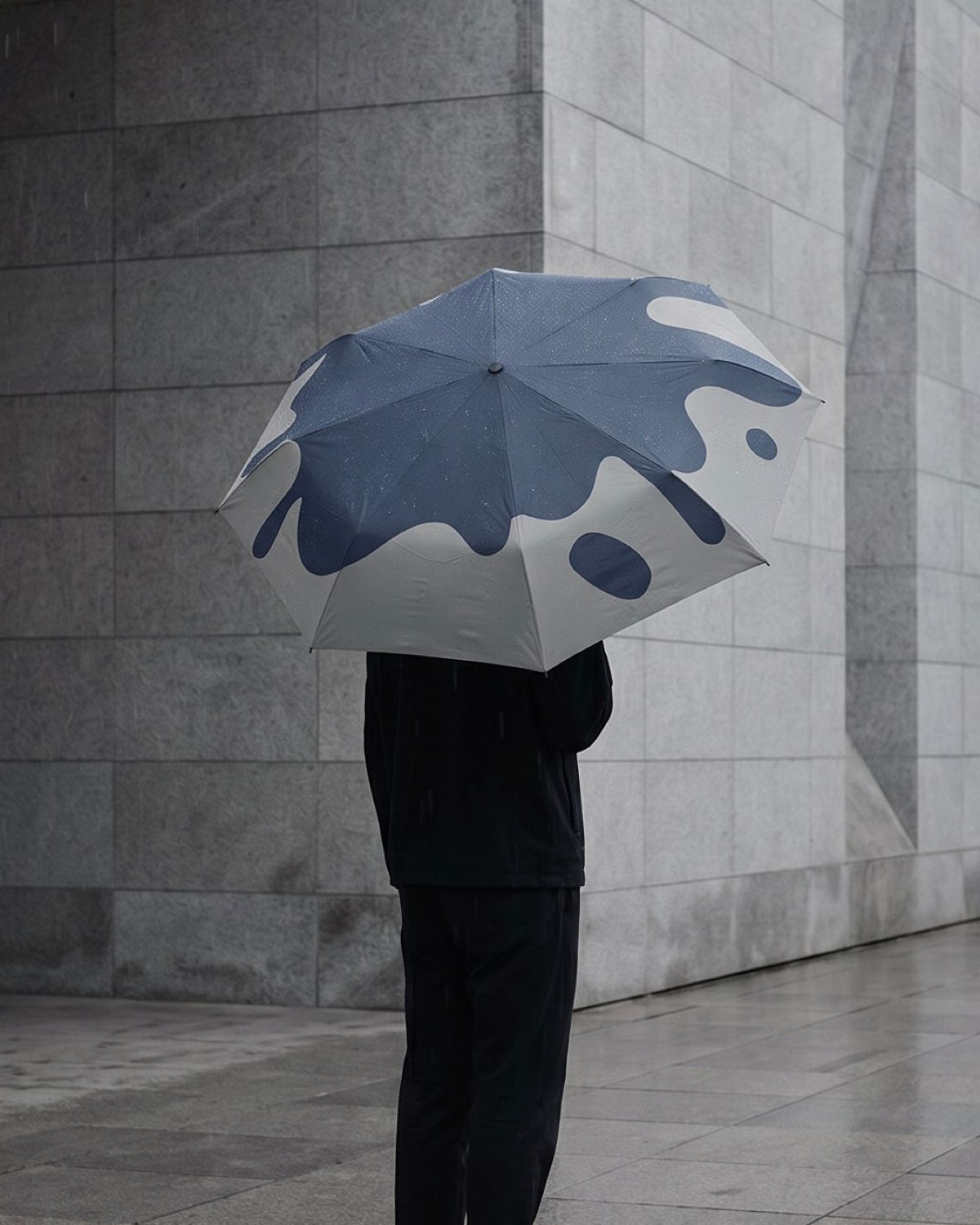
The moment an umbrella opens, it creates a clearly defined space around the body. The canopy does not separate its user completely from the surroundings. Instead, it creates a movable zone between the person and the weather.
This space follows every movement. It can be carried, angled and shared with someone else. Its walls are invisible; its boundary is defined solely by the edge of the canopy.
There is an architectural quality to this. The umbrella creates shelter without requiring a fixed location. For a few minutes, it becomes a personal roof before disappearing into the hand, beside a door or inside a bag.
One Object, Two Forms
Open and closed, an umbrella can appear to be two different objects.
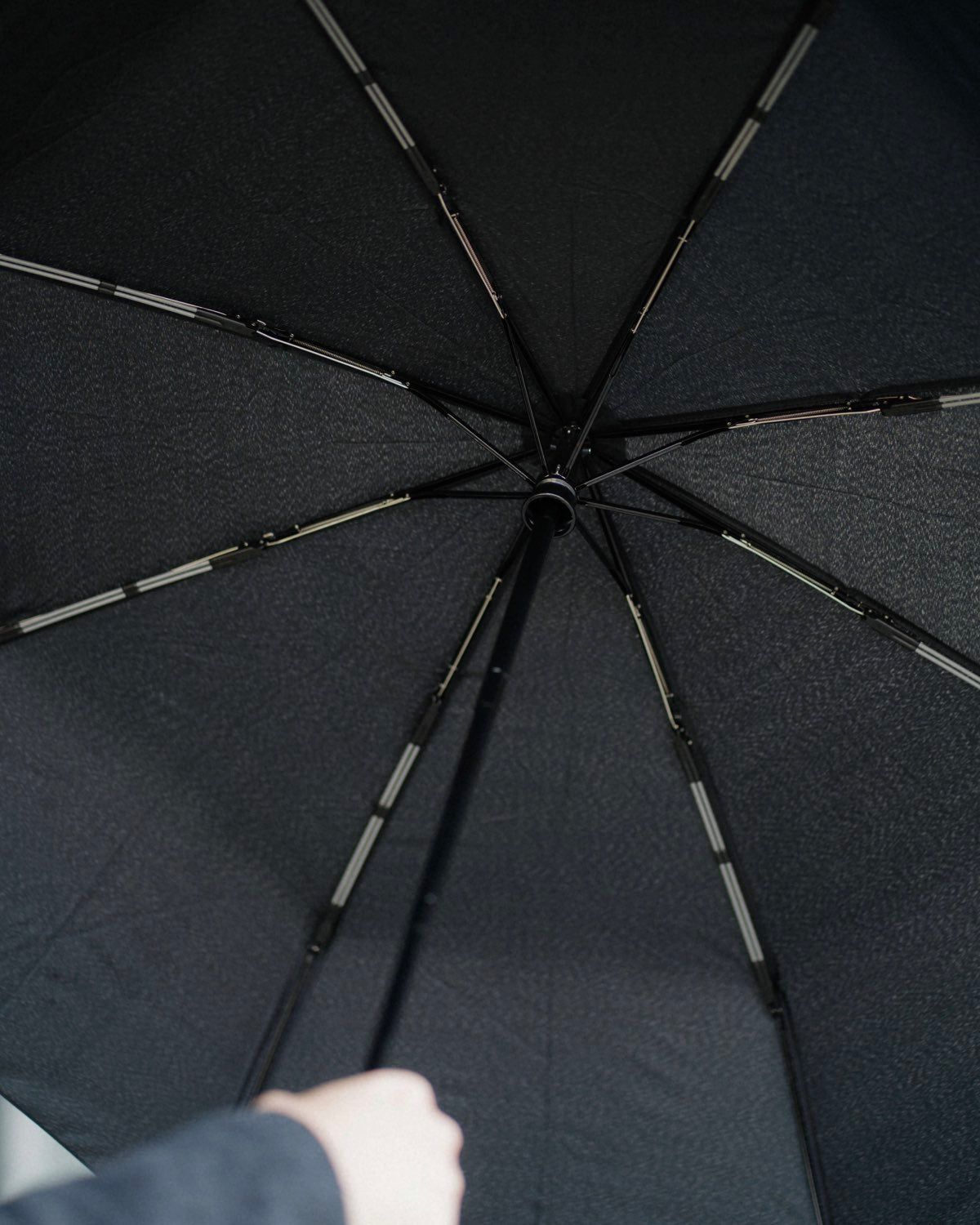
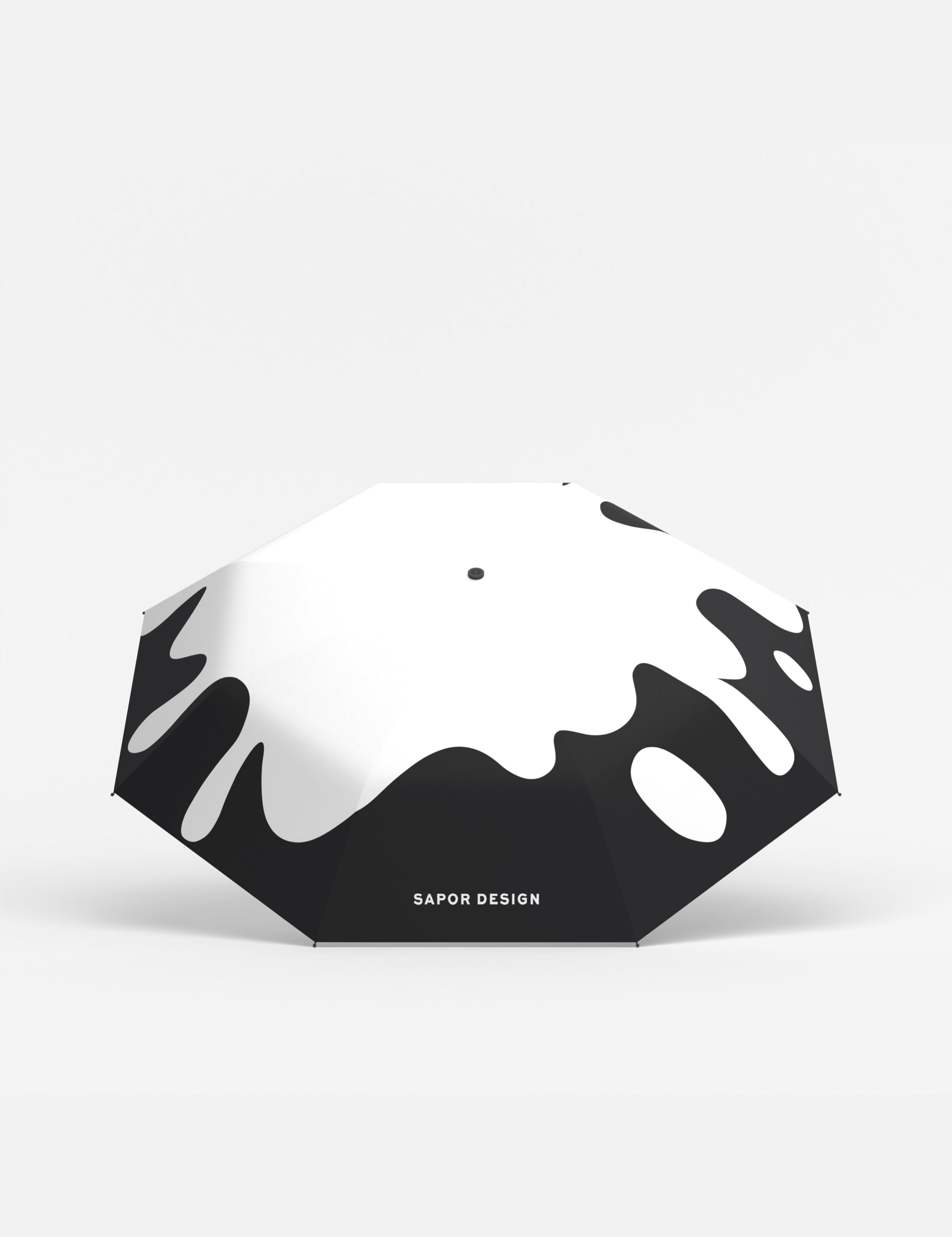
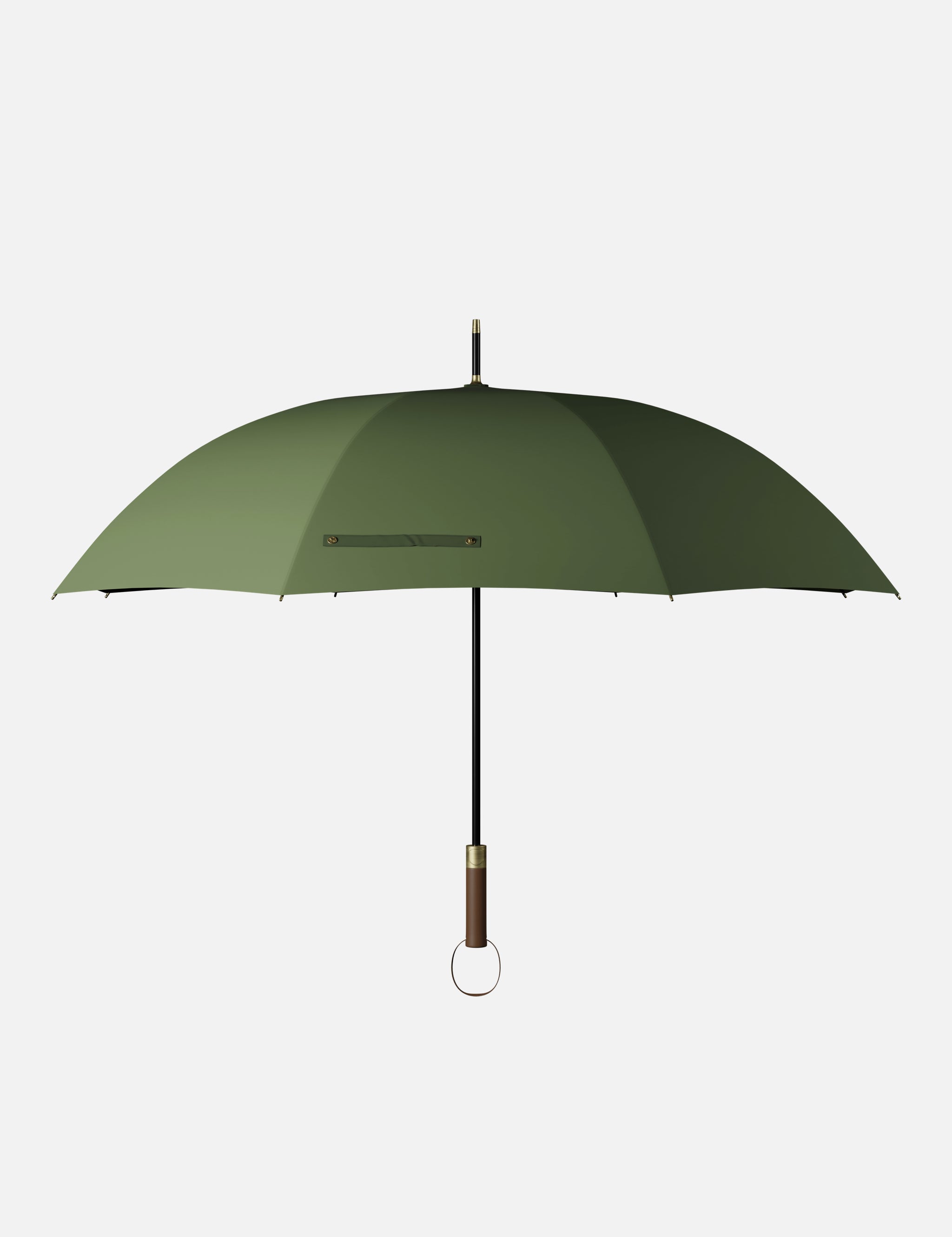
When open, it reveals its complete geometry. Ribs and fabric panels create a radial order unfolding around a central point. The tension of the canopy determines its curvature, proportions and presence in space.
When closed, the surface becomes a line. The canopy folds around the shaft, the ribs rest closely beside one another and the handle becomes the object’s most visible element.
This transformation presents a particular design challenge. An umbrella should not only work in its ideal open state. It spends a considerable part of its life closed: carried in the hand, resting against a coat, standing beside a door or placed inside a bag.
Good umbrella design considers both states.

A Mechanism That Disappears in Use
Beneath the canopy is a system of shaft sections, runner, joints, ribs and stretchers. When the umbrella opens, numerous components move at the same time. The fabric unfolds, the ribs align and the canopy is placed under tension.
Ideally, very little of this complexity demands attention during use.
The quality of the mechanism is expressed through the pace of its movement, the resistance felt when closing it, the sound of its lock and the ease with which the canopy takes shape.
A carefully designed mechanism does not need to explain itself. It behaves clearly and precisely.
Close to the Body
An umbrella is not observed from a distance. It is carried, held and moved. Its handle rests directly in the hand. The shaft runs close to the body, while the folded canopy touches clothing and bags.
Tactility, weight and balance are therefore part of its design.
The feel of a surface, the security of the grip and the distribution of weight while walking can shape the experience of an umbrella more strongly than many visible details. An object may be formally convincing and still feel unfamiliar or poorly balanced.
In this sense, the umbrella is a quiet companion. Not because it should be insignificant or anonymous, but because it must integrate naturally into movement and everyday life.
Why the Umbrella Is Overlooked
An umbrella usually becomes important only once it has already started to rain. It is bought at short notice, taken from a corner or placed in a bag at the last moment. As soon as the sky clears, it recedes into the background again.
It is therefore often judged by a single criterion: does it keep the rain away?
That question is essential, but incomplete. It leaves aside how the umbrella is constructed, how it behaves in use, how its materials retain their function and what presence it has as an object carried through everyday life.
An object can be ordinary without being arbitrary.
A Familiar Form With Room for Design
The fundamental principle of the umbrella has remained stable for a long time. Its design potential therefore lies not necessarily in adding more functions, but in refining what already exists.
The number and arrangement of ribs alter the rhythm of the canopy. The cut of the fabric determines curvature and tension. The length, diameter and material of the handle influence posture and balance. Colour behaves differently across fabric, wood, polymer and metal. Even the closed umbrella has proportions of its own.
None of these decisions exists in isolation. A coherent object only emerges through their relationship.

How Sapor Considers the Umbrella
At Sapor, our starting point was not how to decorate an existing umbrella. We were interested in the umbrella as a complete object.
How does it appear when open and closed? How does it sit in the hand? How does its mechanism move? How do the handle, shaft, ribs and canopy relate to one another? And how can an object possess presence without becoming insistent?
These questions have led to a collection of distinct models. They differ in construction, handle, material and expression, but follow the same idea: an umbrella deserves the same design attention as the other objects that accompany us through daily life.
Restraint does not mean an absence of character. It means that form, material and function do not need to compete with one another.

Seeing the Umbrella Again
Perhaps the umbrella is overlooked not because it lacks design potential, but because its form has become so familiar that we have stopped noticing it.
It is an unusually complete object: movable and stable, textile and technical, personal and shareable, a surface when open and a line when closed.
It deserves a closer look.
Embrace the rain.